


Kitchen Cabinet Finishes in Houston: Fenix vs. Lacquer vs. Wood Veneer (2026 Luxury Guide)


Walk into any luxury European kitchen and the first thing you notice is not the appliances or even the countertop. It is the surface of the cabinetry: how it catches the light, how it feels under your hand, and how it still looks five years later. Choosing among kitchen cabinet finishes in Houston is one of the biggest decisions in a remodel, because cabinet fronts cover more square footage than any other surface in the room.
At Kitchens of Texas & Co, we help homeowners compare finishes side by side every week in our Conroe showroom. In this guide, our team breaks down the five modern kitchen cabinet finishes we specify most often: Fenix nanotech laminate, matte lacquer, high-gloss lacquer, natural wood veneer, and glass or ceramic fronts. You will learn how each one looks, how it holds up to Gulf Coast humidity and busy family life, and where it fits in your budget.
Why Kitchen Cabinet Finishes Matter More in Houston
Houston is hard on materials. Long, humid summers, months of air conditioning, and the occasional power outage mean your cabinetry lives through real swings in moisture. Lower-quality finishes can swell at the edges, peel, or yellow under those conditions.
That is why luxury European cabinetry is engineered differently. Premium Italian and German manufacturers use moisture-resistant cores, laser-fused or PUR edge banding, and multi-coat finishing systems that seal every face of the door. The finish is not decoration; it is the protective shell of your entire investment.
If you are still deciding on the cabinet box itself, start with our guide to frameless European kitchen cabinets in Houston, then come back here to choose the surface that goes on top.
Fenix Kitchen Cabinets: The Super-Matte, Fingerprint-Resistant Finish

Fenix NTM is an Italian nanotech surface developed by Arpa Industriale, and it has quickly become a favorite in high-end European kitchens. Its velvety, ultra-matte texture reflects very little light, so dark colors look rich and deep instead of shiny.
What Makes Fenix Different
Anti-fingerprint: the low-reflection surface hides smudges, which is a game changer for black, charcoal and navy kitchens.
Thermal healing: according to the manufacturer, superficial micro-scratches can be repaired with gentle heat, such as a warm iron over a damp cloth.
Soft touch: it feels warm and silky rather than cold or plasticky.
Easy care: mild soap and water is usually all it needs.
Fenix sits in the upper-middle price range. It is ideal for families who want a sleek, handleless kitchen cabinet look without fingerprints on every door.
Matte Lacquer Cabinets: Timeless, Custom-Color Elegance
Matte lacquer cabinets are the classic choice in Italian design. Each door is sprayed in multiple coats, sanded between layers, and cured for a smooth, seamless surface with no visible edge seams. The biggest advantage is color freedom: lacquer can be matched to almost any paint color or RAL code.
That makes matte lacquer perfect for soft greige, warm whites, sage greens and the other muted tones that dominate our list of 2026 kitchen color trends.
Things to Know Before You Choose Lacquer
Lacquer is durable, but it is not indestructible. A sharp knock can chip an edge, and repairs usually require a professional touch-up. Very dark matte lacquers can also show oily fingerprints more than Fenix does. For a busy family kitchen, many of our clients use matte lacquer on wall and tall units and a tougher finish on the most-used base drawers.

High-Gloss Lacquer: Maximum Light and Drama
If your kitchen is short on natural light, high-gloss lacquer can transform it. Polished to a mirror-like finish, gloss fronts bounce light around the room and make compact kitchens feel larger. The look is unmistakably contemporary and pairs beautifully with stone waterfall islands.
The trade-off is maintenance. Gloss shows fingerprints, water spots and fine scratches more readily than matte finishes. We generally recommend gloss for upper cabinets, display walls and low-traffic zones, or for homeowners who enjoy a pristine, polished look and do not mind a quick microfiber wipe each evening.
Wood Veneer Kitchen Cabinets: Natural Warmth With European Precision

Wood veneer kitchen cabinets use thin slices of real timber, such as oak, walnut or eucalyptus, bonded to a stable engineered core. You get the authentic grain, depth and warmth of real wood, but with far better dimensional stability than solid wood. That matters in Houston, where solid timber doors can move as humidity rises and falls.
Book-Matched and Sequence-Matched Grain
In premium European cabinetry, veneer leaves are carefully book-matched or sequence-matched so the grain flows continuously across a run of doors. On a wall of tall pantry units, the effect is like a single piece of furniture. Finishes range from natural oil to matte varnish, which adds a protective layer without the plastic look of heavy gloss.
Wood veneer typically sits in the upper price tier, especially for exotic species or continuous grain matching. It is one of the most requested surfaces for estate homes in River Oaks and Memorial.
Glass and Ceramic Fronts: The Ultra-Luxury Options
For clients who want something truly distinctive, we also specify glass and ceramic cabinet fronts.
Satin and Lacquered Glass
Back-painted or acid-etched satin glass gives a soft, frosted finish that is extremely easy to clean and highly resistant to stains. Glass works beautifully on tall units and wall cabinets and pairs well with integrated LED lighting.
Ceramic and Sintered Stone
Ceramic fronts apply a thin slab of porcelain or sintered stone to the door. The result is heat-, scratch- and UV-resistant, and it can match your countertop so the island reads as a single sculptural block. Ceramic is the most premium finish on this list and adds weight, so it must be paired with high-quality hinges and runners.

Comparing Kitchen Cabinet Finishes in Houston: Quick Guide
Here is how our designers summarize the options when clients ask which is best:
Fenix: best for fingerprint resistance and dark matte colors. Durability: very high. Price: upper-mid.
Matte lacquer: best for custom colors and seamless looks. Durability: good. Price: mid to upper.
High-gloss lacquer: best for brightening smaller or darker kitchens. Durability: good, but shows marks. Price: mid to upper.
Wood veneer: best for natural warmth and furniture-like elegance. Durability: good with proper care. Price: upper.
Glass and ceramic: best for statement islands and ultra-modern design. Durability: excellent. Price: premium.
There is no single "best" finish, only the best finish for how you live. That is exactly what our custom kitchen design process is built to uncover.
How to Mix Modern Kitchen Cabinet Finishes Like a Designer

Some of the most beautiful kitchens we design combine two or three finishes. A few rules our team follows:
Pick one hero material. Let a wood veneer island or a ceramic waterfall be the star, and keep everything else quieter.
Balance matte and sheen. Pair matte tall units with a subtle satin or glass accent so the room does not feel flat.
Repeat each finish at least twice. If you use walnut on the island, echo it in open shelves or a coffee station.
Match the finish to the use. Put the toughest surface where hands, kids and pets touch most.
For more ideas on combining colors and materials, read our guide to two-tone kitchen cabinets in Houston.
Italian vs. German Cabinetry: Does the Finish Change?
Both Italian and German manufacturers offer every finish on this list, but they tend to lean in different directions. Italian cabinetry is known for design-forward materials such as Fenix, fluted veneers and bold lacquer colors. German cabinetry is prized for engineering consistency, with extremely tight tolerances, durable laminates and precision edge banding.
If you are comparing the two, our in-depth guides to Italian kitchen cabinets and German kitchen cabinets explain the differences in detail.
Caring for Luxury Cabinet Finishes in Houston's Climate
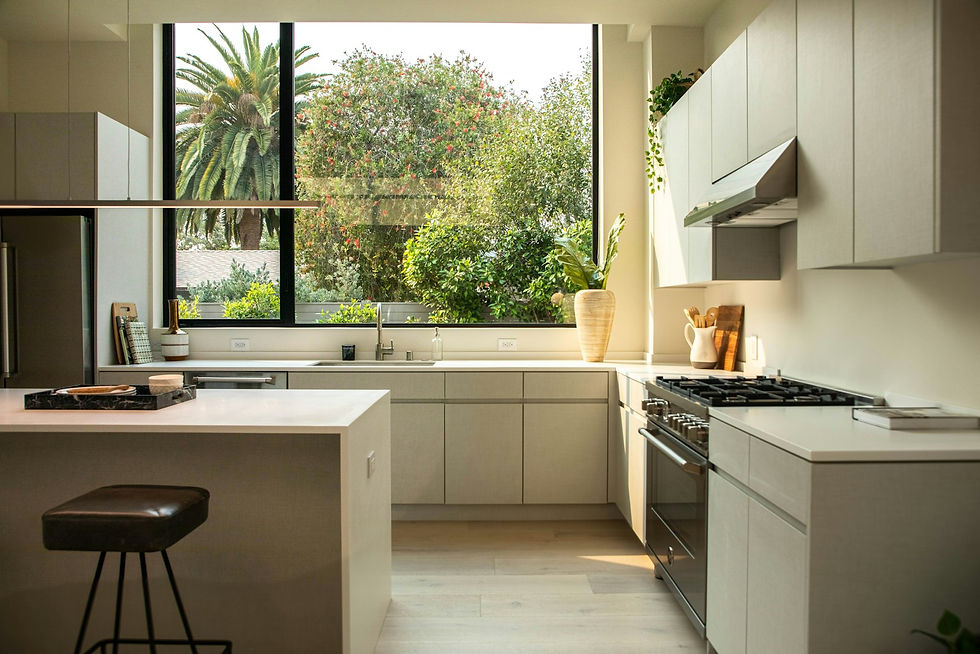
A few simple habits will keep any finish looking new:
Keep indoor humidity steady, ideally between 35% and 55%, especially if you choose wood veneer.
Wipe spills promptly, particularly around the sink and dishwasher, where steam and water collect.
Use soft cloths and mild cleaners. Avoid abrasive pads, ammonia and solvent-based sprays on lacquer and gloss.
Let the dishwasher cool before opening it next to wood or lacquer panels, so steam does not hit the edges.
Consider UV-protective window film for sun-drenched kitchens, which helps prevent fading of wood tones.
People Also Ask
What is the most durable kitchen cabinet finish?
Ceramic and sintered-stone fronts are the most durable, resisting heat, scratches and UV. Among more common options, Fenix nanotech laminate offers excellent everyday durability plus fingerprint resistance at a lower cost than ceramic.
Are matte or glossy kitchen cabinets better?
Matte cabinets hide fingerprints and fine scratches better and feel more contemporary and calm. Glossy cabinets reflect more light and make small kitchens feel larger, but they require more frequent wiping. Many Houston homeowners combine both.
Is wood veneer good for kitchen cabinets in humid climates like Houston?
Yes. Quality wood veneer bonded to a stable engineered core moves far less than solid wood, which makes it well suited to Houston's humidity. Look for sealed edges and a protective matte varnish, and keep indoor humidity consistent.
What is Fenix and is it worth it for kitchen cabinets?
Fenix NTM is an Italian super-matte nanotech surface with a soft-touch feel, low reflectivity and fingerprint resistance. Its manufacturer also says it can thermally heal superficial micro-scratches. It is worth it if you want dark or matte cabinetry that stays clean-looking with minimal effort.
How much do luxury cabinet finishes add to a kitchen remodel?
Finish choice can shift cabinetry cost noticeably, with laminates at the lower end and wood veneer, glass and ceramic at the top. The best way to compare is to price the same layout in two or three finishes during your design consultation. Our luxury kitchen remodel cost guide covers overall budgets.
Find the Right Kitchen Cabinet Finish for Your Houston Home
The right kitchen cabinet finish balances beauty, durability and how your family really uses the kitchen. Fenix is unbeatable for fingerprint-free matte surfaces, matte lacquer offers endless custom colors, high gloss maximizes light, wood veneer brings natural warmth, and glass and ceramic deliver ultimate luxury.
The best way to choose is to see and touch them in person. Visit the Kitchens of Texas showroom at 804 W. Dallas St #1, Conroe, TX 77301, where you can compare real door samples under different lighting. We design modern European kitchens for homeowners across greater Houston, from The Woodlands to Bellaire and beyond.
Ready to compare kitchen cabinet finishes in Houston with an expert? Call our team at (832) 937-7582 or schedule your design consultation online today.


Comments